Gravitational Lensing
Probing the physical nature of lensing objects and sources through gravitational lensing effects in gravitational waves.
I am doing my doctoral thesis at Nicolaus Copernicus Astronomical Center (CAMK), Poland, and my doctoral advisor is Prof. Dr. Hab. Michał Bejger.
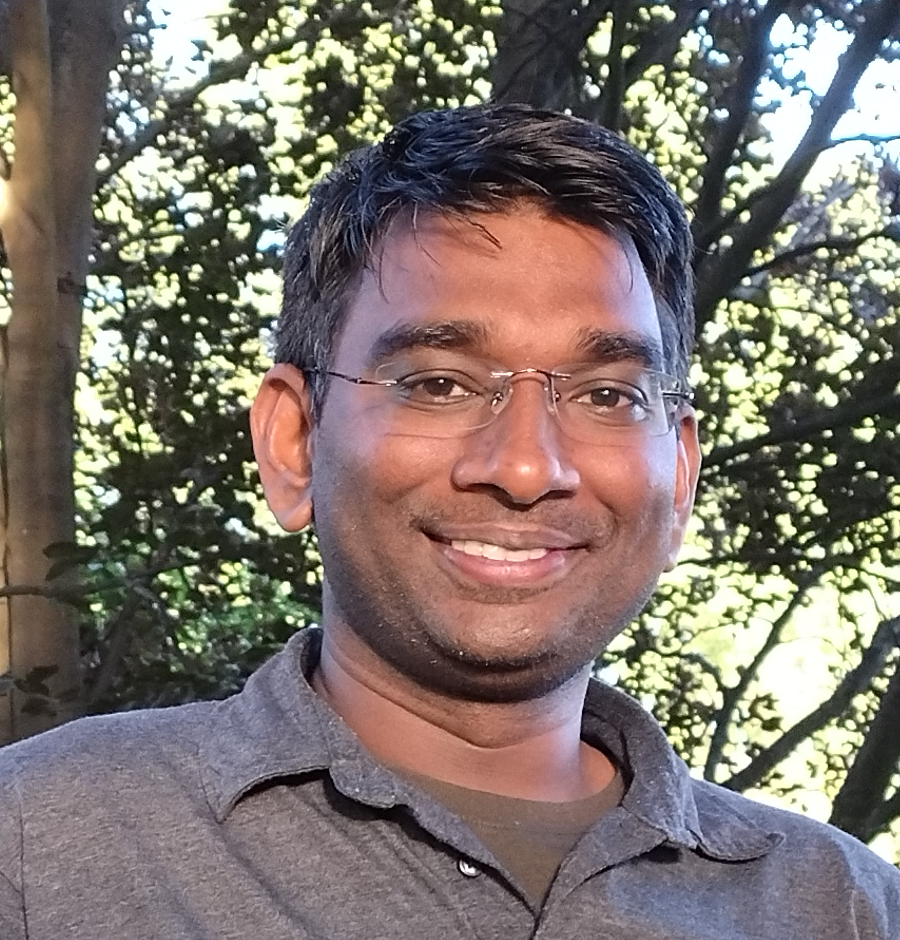
Prior to joining CAMK, I worked as a Scientific Software Developer in the Gravitational Wave Research Group at the Inter-University Centre for Astronomy and Astrophysics (IUCAA), India, where I collaborated with Prof. Dr. Sukanta Bose. Before joining IUCAA, I served as a Junior Research Fellow with the Max Planck Partner Groups at IISER Thiruvananthapuram and the Radio Astronomy Centre, NCRA–TIFR, Udhagamandalam. I have been a member of the LIGO–Virgo–KAGRA Collaboration since 2014, with a brief hiatus from 2016 to 2018.
My earlier professional experience includes teaching, consulting, and working as a Physics Subject-Matter Expert specializing in content development, review, and quality analysis. I also completed internships at Aaum Research and Analytics, Chennai; the Jawaharlal Nehru Centre for Advanced Scientific Research (JNCASR), Bengaluru; and the Indian Institute of Science (IISc), Bengaluru.
I graduated in Applied Physics from the National Institute of Technology (NIT), Tiruchirappalli, following my undergraduate studies in Physics at St. Joseph's College, Tiruchirappalli.
National Science Centre · PRELUDIUM · Principal Investigator
Probing the physical nature of lensing objects and sources through gravitational lensing effects in gravitational waves.
Higher-order spectral analysis methodologies for gravitational-wave data, with applications to signal detection, characterization, and noise mitigation.
Applying machine learning methods to enhance signal detection, improve parameter inference, and reduce computational overheads associated with increasingly large gravitational-wave datasets.
Exploring gravitational-wave signatures from intermediate-mass black hole binaries (IMBHBs) and intermediate-mass-ratio inspirals (IMRIs), focusing on their detectability and physical implications for current and future gravitational-wave detectors.